
research & knowledge
Third Land doesn't just apply established knowledge, we advance it.
We are committed to remaining at the forefront of land and water science through ongoing research, peer-reviewed publications and presentations at scientific conferences. By contributing to the broader scientific community and engaging with emerging research, we ensure our work reflects contemporary thinking while helping shape the future of our profession.
This commitment allows us to translate the latest scientific understanding into practical, evidence-based solutions for our clients.
PUBLICATIONS
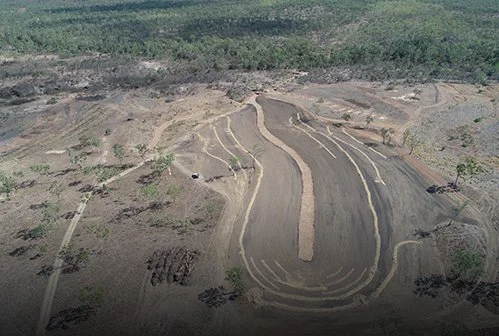
Effectiveness of gully remediation
Major field trial confirms effectiveness of large-scale gully remediation
This study provides robust field evidence that well-designed, process-based alluvial gully remediation can rapidly achieve very large reductions in fine sediment delivery, reducing sediment exports by 96–99%.
The remediation works were designed by our partners Fruition Environmental Pty Ltd and Rock-it Science, delivered through a program managed and funded by Greening Australia. The approaches developed through this project have since paved the way for large-scale alluvial gully remediation across the Great Barrier Reef catchments.
The research also highlights that accurately quantifying baseline sediment yields remains one of the greatest challenges for predicting sediment abatement and evaluating remediation success, reinforcing the importance of robust monitoring and process-based assessment to effectively target and assess remediation investment.
For more information or details of this research, click here.
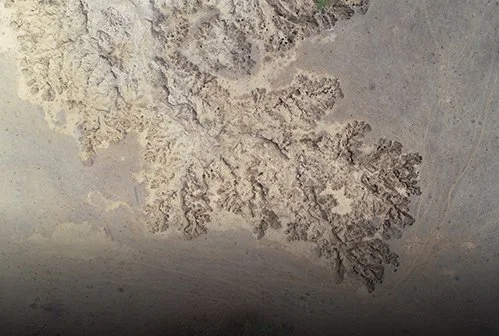
Prioritising the right gullies
Targeting a small number of gullies can deliver major sediment reductions
This study determines sediment production rates in over 23,000 gullies in the most significant sediment source catchment draining to the Great Barrier Reef. It demonstrates that gully sediment production is highly concentrated within a relatively small proportion of gullies. It provides strong evidence that strategically targeting high-yielding erosion hotspots can maximise the effectiveness of remediation investment. Around 80% of total gully erosion originated from just 20% of gullies.
Importantly, the findings provide a positive management message by demonstrating that substantial catchment-scale improvements can be achieved by focusing resources on a relatively small number of priority sites. The prioritisation framework developed through this research provides a practical, evidence-based approach for directing investment where it will deliver the greatest reductions in sediment loss and downstream water quality benefits.
For more information or details of this research, click here.
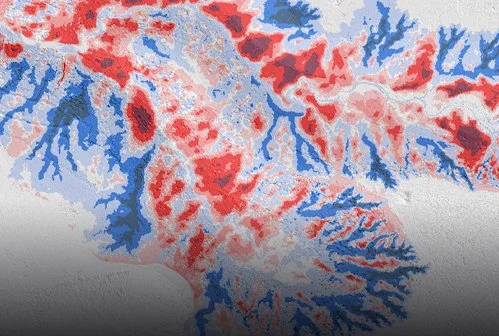
Standards in lidar analyses
Raising the standard for erosion assessment using repeat lidar
As high-resolution terrain data becomes increasingly accessible, reliable erosion assessments depend not only on the quality of the data, but also on the quality of the analysis. Careful treatment of uncertainty and geomorphic processes must be at the centre of such assessments.
This research serves as an important reminder that robust methodology underpins sound environmental decision-making. By demonstrating how methodological choices can influence erosion estimates, it reinforces the need for scientifically defensible assessments that provide a reliable basis for remediation design, investment decisions and long-term monitoring.
For more information or details of this research, click here.
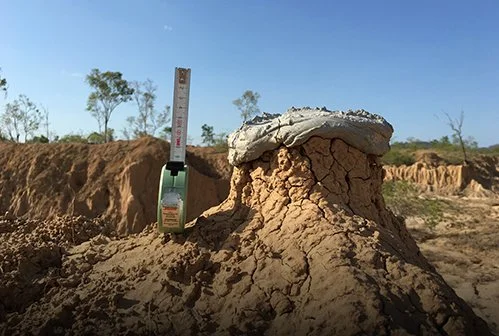
Insights in gully erosion processes
A new understanding of alluvial gully erosion
The long-held assumption has been that concentrated runoff, headcut retreat and sidewall failure are the dominant erosion processes. This study demonstrates that direct rainfall (rain splash and wash erosion) acting across extensive bare internal gully surfaces is itself the major contributor to sediment production, accounting for an estimated 50–80% of sediment losses in the measured gullies.
Importantly, the research provides a stronger scientific basis for remediation design by showing that effective erosion control must stabilise extensive internal gully surfaces, not just the gully head or drainage network. This process-based understanding supports the development of more effective remediation strategies and improves confidence that management interventions address the dominant sources of sediment loss.
For more information or details of this research, click here.
work with us
Get in touch to discuss how we can help.